

Pet insurance • Informed choices

What will insurance for your dog cost?

Use your dog’s actual quote and separate the monthly premium from routine care and claim-time spending.

Owner sitting beside a large shepherd-type dog at home
✓ Policy-first ✓ Independent ✓ Useful checks
Direct answer
The cost of insuring a dog depends on its age, breed or mix, residence and the policy benefits selected. A reliable personal figure requires a current quote. Budget for the premium, care outside the policy and your share of eligible bills; a national or advertised starting price cannot establish those amounts for your dog.
Pet profile

Keep the dog’s profile fixed while pricing the policy

Record the dog’s exact age, breed or mix, home address and known history. Ask how to enter an uncertain rescue birth date or mixed breed rather than changing the answer to obtain a smaller price. Use the same profile across quotes collected close together.

Input Why the comparison can change
Age and breed Insurers price different profiles differently; one puppy quote is not an adult-dog benchmark.
Residence The location used for rating can affect the premium.
Coverage category Accident-only and accident-and-illness policies insure different events.
Cost sharing and limit Deductible, percentage, payment basis and maximum benefit change what stays with you.
Optional services Routine care, examination fees or other additions may change the complete price.

This guide did not obtain personal dog quotes, so it does not provide an invented low-to-high monthly range. The useful number is the complete charge attached to the configuration you could actually buy.
Cost & value

A puppy budget contains more than insurance

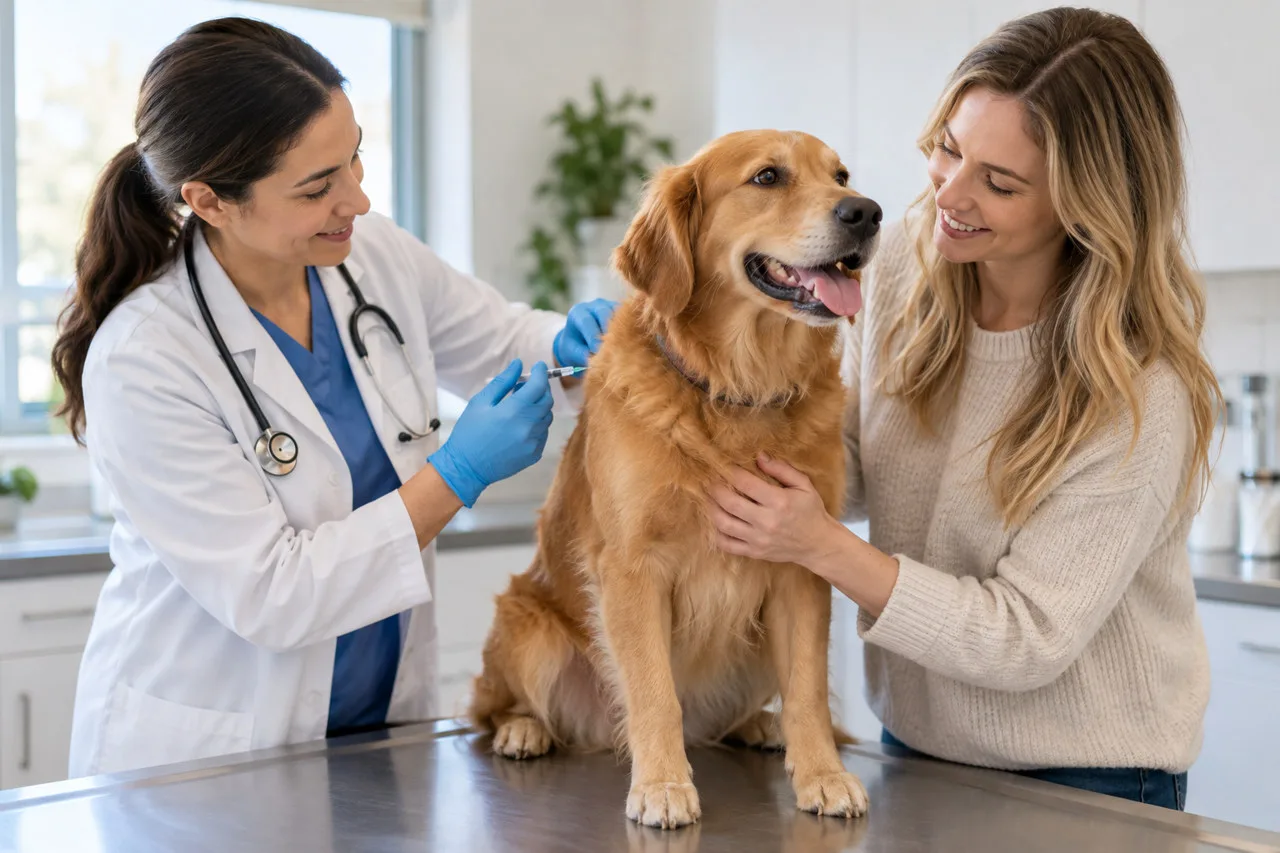
Veterinarian examining a golden-colored dog beside its owner
Separate routine first-year services from insurance for eligible unexpected care.

For a puppy, list expected examinations, vaccinations and any veterinarian-recommended routine procedures separately from unexpected medical protection. A wellness allowance may reimburse scheduled services up to stated amounts; it should not be confused with an accident-and-illness benefit.

Ask the clinic for an itemized routine-care estimate and compare it with the optional package’s eligible services and caps. Do not add an allowance’s full headline value to expected savings if some services will not be used or the estimate exceeds individual limits. Medical timing should follow the veterinarian’s recommendation rather than a reimbursement calendar.

Also confirm when the new insurance begins and when each relevant waiting period ends. A purchase receipt does not establish immediate protection for a problem already showing signs.

Cost & value

Build a no-claim budget and a treatment budget

Consider a fictional dog policy costing $42 each month. Its twelve-month premium is $504. If the owner separately expects $310 of routine care outside the policy, the no-claim spending plan is $814. That does not include unexpected treatment, optional package charges or any disclosed billing fees. These are invented planning figures, not market prices.

Now suppose an illustrative $2,400 treatment bill produces a $1,450 payment under that fictional contract after all eligibility and cost-sharing rules. The owner’s share is $950, making the premium-plus-routine-plus-treatment total $1,764. The insurer payment is an assumption for this budget demonstration, not a universal formula.

There is a second number to plan for: the clinic may need the $2,400 before reimbursement arrives. Ultimate spending and cash needed at the appointment are not interchangeable. Ask the actual practice about its payment process before relying on insurance to bridge that gap.

Cost & value

The first price is not a lifetime quote

Ask how age, local veterinary costs and changed selections can affect renewal. That does not establish the future price for this dog or the rules used by every insurer.

Keep the original quote settings so you can distinguish a price change from a benefit change later. Before replacing a policy to save money, review whether a condition acquired during current coverage would become pre-existing under the replacement. Retaining useful protection can matter more than a smaller first payment.

If the complete budget is too high, identify what you would intentionally change: optional predictable-care benefits, a deductible you can truly fund or a lower benefit ceiling whose remaining risk you accept. Do not assume that dropping illness cover keeps the same protection.

Evidence

Sources and policy context

These public references support the consumer or veterinary context. Named insurer details were checked in official product materials; the policy offered for your pet and state determines the actual terms.

Next step

Compare Current Pet Insurance Rates

Check current options for your pet and location, then compare the policy details, exclusions, costs, and eligibility before choosing.

Compare the policy before you choose Check the actual offer, exclusions and out-of-pocket terms.
See Rate Options